Showing posts with label Czech. Show all posts

Sunday, August 2, 2020

Covid-19 Update from the Czech Republic

Hi Everyone,
This post is an update on the situation here with the Covid-19 pandemic. So far, Jiri and I have managed OK. We survived about 3 months of lockdown in our small flat. This was no mean feat, as you can imagine! 

Close quarters for that long can make things a bit challenging. But I’m happy to let you know we made it through relatively OK. I say “relatively,” because you know there are ups and downs with all things. There are disagreements, arguments, etc. That’s normal, especially considering the situation. How often is it that you live through a pandemic like this? 


Rollback of Lockdown Restrictions
The lifting of lockdown restrictions began near the end of May. The Czech government managed the rollback slowly, then stopped to see how things went before moving ahead with the rollback of the next restrictions. From the end of May until almost the end of June, things went pretty well.

As restrictions were lifted, the government worked with other European countries to create agreements on travel requirements for Czechs and citizens of those countries. This took some time, but eventually the Czechs had a broader choice of destinations on the Continent, at least for a time. There have also been some international destinations that allowed Czechs to enter without too many restrictions. 

Me in a Mask my Sister-in-law Made

What About Wearing the Dreaded Masks?
Mask restrictions were also greatly relaxed with the rollback of lockdown restrictions, which was a relief to many people. Wearing a mask is not easy, but it was thought necessary. So, everyone followed the rules; well, at least the vast majority of people followed the rules regarding masks. 

We’ve not seen the huge protests against wearing masks that are currently going on in the US. I’ve been thankful for that. Some people, as the weather warmed up early in the Spring, began to not wear masks, even though there were still requirements for us all to wear them.Mask-wearing has not been a too much of a problem here. 

I’m anxious to see how it will be when we have to all return to masks in the next month or two. The government is predicting we’ll all need to wear masks when the cold and flu season starts in the fall. Will people go back to wearing them without protests? We’ll see how it goes. 


Back to Work
Jiri headed back to work the first week of June. I have to say it was a little scary, but he managed it well. The hardest part of his traveling is the use of public transport. However, it’s been OK to this point. 

For me, life has continued on pretty much like normal. I live and work from home all the time due to my allergies/asthma and other chronic conditions. This is the case even when there is no pandemic. So, not much has changed for me. I do get out and walk, shop, etc. 

Covid Infections on the Rise
Near the end of June and the beginning of this month, more cases of Covid have been erupting here. One of the hardest hit regions for several weeks was Karviná. This area is located in the Moravian-Silesian part of the country, which borders on Poland. 

Karviná is one of the places where mining is big, and at one large mining company many people first became infected with Covid-19. This was the main hotspot for several weeks. That area alone has seen over 2,200 confirmed cases of Covid, and it’s still growing. 

As the infection grew in Karviná, other Covid hotspots of the erupted around the country. There were only a few spots where the infection rate was high, but that’s now changed. New infections are increasing in most parts of the Czech Republic. Moravia-Silesia, Jihlava, the Olomouc region, Prachatice (Southern Bohemia), and Prague are some of the hardest hit now. However, we’re still not seeing the kind of infection rates as seen in the US at this stage. 

How things will develop over the next couple of months, however, is difficult for the experts to predict. If things keep going the way they are, then we’ll have some major problems by September as far as the number of those infected and sick.  


Trying to Live Normal Lives
Many people here, as in other parts of the world, are trying to get on with normal life. Many have gone on vacation to Croatia, which is a top destination for many Czechs in the summer. 

Others have traveled to countries that have no restrictions for Czechs. And a lot of people here have chosen to either vacation in the Czech Republic or enjoy an extended staycation at home or their chatas.
 
People are out hiking and enjoying our nice summer weather. Others are working in the garden, enjoying pivo at the hospoda, etc. 

And the stores have caught up with demand for cleaning products and most foods. There were times during the lockdown when it was almost impossible to get hand sanitizers, disinfectant cleaning products, etc. The stores where we live ran out of meat, flour and sugar a couple of times. A few times there were shortages with OTC at the pharmacies. However, we never did run out of toilet paper! 😊


Nice Summer in Spite of Covid
Our summer has been pretty nice with rain and moderate temperatures on most days. There have been a handful of pretty hot days so far, but I’ve run the air conditioner only 3 times. Last year, it was 2 straight weeks with the air conditioner, so this year is pretty nice!

Before the rains started earlier in the season, the country was dealing with a once in 500-year drought. It was especially dry in Moravia and some parts of south-central Bohemia. We’ve been having regular rain now on and off for the past few weeks, so everything’s been nice and green. Just a pretty summer—you’d never know we’re in the midst of a pandemic when you look out the window or take a nice walk, and enjoy the beautiful nature in this country. 


That’s all for this post! I just wanted to share this update on our life here, in the Czech Republic during the pandemic. 

I hope and pray for each of you every day that you and yours stay safe and stay healthy in these very strange times. 

God bless,
Sherry

Monday, April 27, 2020

An American Abroad During the Pandemic


What’s it been like being an American abroad at this time? Interesting, to say the least. As someone who takes a huge interest in medical topics, I’ve watched the virus expand all the way from China to Europe, and into my own and other countries around the world.

Getting Ready for Covid-19
When it first became apparent the virus had hit Italy, I knew then it would come here. I started to buy necessities about a month before everything hit the fan in this country. My parents always taught my brother and I to be ready. Be ready for an emergency. I know what you’re thinking—and no, my folks are not traditional preppers. Instead, they taught us common sense methods to be ready for things like blizzards, tornadoes, hurricanes, forest and grass fires, etc.

To be ready, my folks taught us to have supplies on hand—enough for a week or two. This meant water and food for us and our pets. My parents also taught us what to do when the electricity goes out. Learn how to keep a house from freezing in the mountains in the dead of winter (that’s another story—my Dad had just put in some new plumbing when we lost all power. I had to keep a wood stove and a fireplace going day and night for about 3 days to keep the house from freezing!). Learn how to handle a medical issue and more. This is what “be ready” meant for our family.


Living over here, however, I’ve become somewhat lax in being ready. We live in an area where the electricity rarely goes out. If it does, it may be out for an hour or so rather than days on end. We have pretty mild weather, though it can be pretty nasty at times. Still, we don’t have hurricanes, tornadoes (if we do, they’re fairly small and rare), etc. As a result, I’ve kept a few things on hand, but haven’t had enough supplies to manage two weeks or so in case of a longer emergency.

That changed when I saw the virus coming. I went out to buy canned food—only those things we would actually eat and eventually use. I also bought food for our small freezer, some hand sanitizer (2-3 small bottles), a couple bottles of universal disinfectant (Sanytol), etc. I also bought some medications ahead, including prescriptions from the doctor. I haven’t hoarded anything, always leaving enough for others who also need these items. I was out shopping about 2 weeks before everyone else.

When Czechs finally began to wake up and realize the virus was coming here, they went out and online and shopped until they dropped. There were reports in the news of people buying as much as 12,000 czk to 13,000 czk of groceries. This was astounding! That’s about one month’s salary for most people here! Most people are not able to spend that amount on groceries normally! People were buying up everything. However, we still have had toilet paper, unlike my country.

During this preparation time, it became difficult to buy OTC meds such as paracetamol (Tylenol), cough and cold meds, etc. They’ve been scarce. Just this week, our local lekarna finally had their own brand of paracetamol available, which was a happy circumstance!


Being Scared
The other part of me, that I desperately tried to avoid, was becoming scared. Scared for Jiri and I, our families and friends on both sides of the ocean. In the preparation for the virus, I was able to bury these feelings of being scared; however, they finally came out about the middle of March.

I had to make a trip to the sleep clinic to be evaluated for possible OSA (Obstructive Sleep Apnea). Riding public transport was the very last thing I wanted to do, but there was no choice. I put on a mask, was glared at the entire trip, and completed the sleep study.

Since that time, I’ve calmed down, but still carry the tension and worry as many of us do right now.


Living in the Czech Republic During the Pandemic
My thoughts on being in this country during a pandemic—I’m relieved Czechs have taken the virus so seriously. I appreciate their strict efforts to keep us all safe and keep infection rates down so hospitals don’t become overloaded. That’s the goal—flattening the curve--which has been achieved to date.

Also in some cities they have food available for those who are without. This may include single mothers, the elderly, and people who are out of work.

And the Czech government has been good about getting help to businesses, similar to the programs in the U.S. and other countries. If people need help, they can get it here.

The Czech Republic has also sent help to other countries hard-hit by the virus including China and Italy, among others. They've been very active on the global stage, though you probably haven't heard about this in the news.

The Mask Movement
One thing I've really loved seeing during the pandemic here is the way people came together over wearing masks. Once the government decided masks were indeed useful to curb the spread of the virus, people who had sewing machines at home got busy sewing masks for their family and friends.

Then, all of a sudden, a movement began where everyone who had a sewing machine began making masks to give away free to those who needed them. There were also fabric shop owners and other businesses that took part in the movement. It was amazing! In a matter of days, almost everyone in this country had at least one mask! That's just over 10 million masks!

My sister-in-law got busy with her machine and made masks for the entire family and others, too. She has sent us about 6 masks a piece. Here's me in one of the masks from my sister-in-law. I love this fabric!


Rolling Back the Lockdown
The Czech government has started slowly rolling back the lockdown rules. The borders have been opened a bit. In fact, the day this was announced many people thought they could now freely travel at will!

However, the government has strict rules on traveling. For one thing, if Czechs and legal residents travel outside the country, they have to take a Covid-19 test, not the quick test, to show they're not ill. They have arrange this test at their destination, paying for the test themselves. If Czechs don't take the test, they will be under state mandated quarantine for 2 weeks. 

We can also start gathering in groups up to 10--during the lockdown, we were only allowed to be together in 2s. 

Over the next couple of weeks to a month, more of the lockdown will be rolled back. As for masks, it looks like for now we'll be required to wear masks until the end of June when out in public. 

I’m concerned that lifting the lockdown may be a little too soon. We’ll have to wait and see. 

Many people around the world are frustrated with staying in for so long and out of work. Who can afford to not work for 2-3 months or longer? On the other hand, there are those like me who on a good day need to mostly live at home due to underlying health issues. So, an balanced rolling back of the lockdown is probably the best course. 


Appreciation for Everyone on the Front Lines
I have a great appreciation for everyone on the front lines. This includes all medical staff, hospital support staff, those who have stayed working in the grocery stores and in the pharmacies. 

And the truckers and pilots who have continued their long hauls to keep supplies moving, along with the delivery drivers, postal workers, those in the warehouses, and more.

This includes family members who are also on the front line in the US. 

There are so many people who have kept us going--a HUGE thank you to you all!! 


The Future--What Will It Hold? 
No one is sure. Will there be successive waves of infection from the virus, similar to those experienced during the Spanish flu of 1918? Will the novel coronavirus just "go away" during the summer months, never to return? Will it keep going from now on? Only time will tell. 

The main thing is just to keep doing what's needed to keep youself and loved ones safe. Whether you have to return to work or stay at home, we will each be responsible for our own care. Taking care of ourselves may mean keeping supplies on hand in case of another lockdown, etc. Being responsible and helping others where possible--that's about all we can do. 

For now, Jiri and I are still at home. We're both working, which helps to stay mostly sane. I'm also doing the normal household chores and Jiri does the shopping. We're managing so far, though I've got a good case of "submarine fever," what we call "cabin fever" back in the States.


The weather's been very pretty, so we take walks when possible. It feels good to be out in the sun! The beautiful spring weather brings hope and we can see life continuing on as we deal with the pandemic caused by Covid-19. 

I sure wish you all the very best in health and safety. Take care and come back again!

God bless. 

Have a great day,
Sherry

Monday, December 11, 2017

Cross-Cultural Wedding Anniversary

At first glance, it would seem that a Czech and an American would have plenty in common when it comes to culture and society. Wrong! Think about it for a minute. My Czech husband grew up under the communist regime, while I grew up under capitalism. Not only that, we have the “East/West” cultures to deal with, along with many other differences. 

Now don’t get me wrong—Jiri and I had plenty of things in common from the beginning, but we didn’t really “get” many differences until two years after our marriage, when I moved to be with him in the Czech Republic.


Our Language Differences
Over the years, we’ve regularly faced language issues. Our relationship has been mostly conducted in English. One of the biggest problems we faced after I moved here was with my use of American slang.

We’ve also developed our own form of “Czenglish”—not proper Czech and not proper English—that we understand most of the time. However, when I through in some American slang, and all bets are off. 


Funny Arguments
Jiri and I would get into an argument and I would burst out with some slang—nothing offensive and no bad words—just normal everyday slang used back home. When that happened, Jiri immediately jumped to the conclusion that I was using bad words and calling him bad names. Nothing could be further from the truth! However, that feeling does add a different dimension to a fight.

So, right in the middle of the fight, we’d have to back track to the slang I had used. I had to explain what it meant, and that it wasn’t offensive in any way. By the time the explanations were over, the fight was forgotten (most of the time!) and we were laughing and making up again. This was just one aspect in our cross-cultural marriage we had to deal with. There have been many more over the years. 


Proper Etiquette & Other Issues
If you want to fit in to a new culture as an expat, then you'll need to try to dress and act like those in your new home country, along with learning proper manners, etc.  

Jiri had a lot to teach me about proper Czech/European behavior, etiquette and other issues. One of the hardest issues for me has been talking too loudly in public spaces. Americans, we don’t know it, but we’re very loud and boisterous in public, compared to many other parts of the world. Here, in the Czech Republic, people are generally soft-spoken in public. You rarely hear anyone raising their voice unless there’s an argument involved, football (soccer) or alcohol. People here laugh and talk, but do it quietly in public areas.

Well, me, I’m quiet by American standards, but Czechs knew right away I was a foreigner--an American or a Brit (they couldn’t tell from my accent)--because I talked and laughed louder than Czechs nearby. This type of behavior’s not appreciated by Czechs. They will give you dirty looks. Someone may make some comment in your hearing or tell you directly that you’re being too loud and unruly. 

I had a really hard time “toning it down” to a Czech level, especially when happy to be with my husband. Nowadays I blend in sound-level-wise, unless I’ve just come back from a visit back to the States. Then I have to “flip the switch” to my proper Czech way of being and doing. J


Home Shoes (Pantofle)
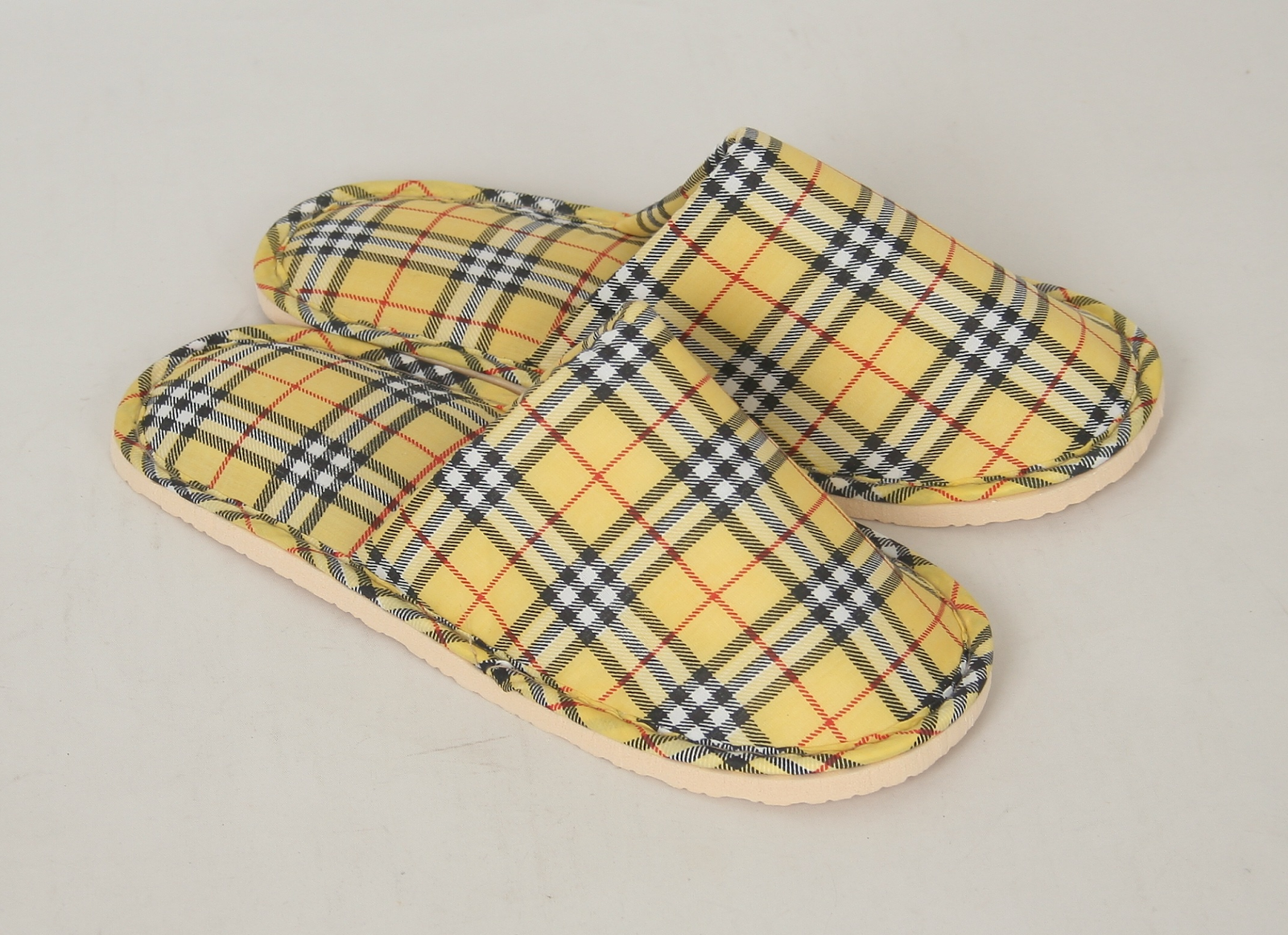
Another issue is removing your shoes when entering your or someone else’s home. This was really strange for me. You’re supposed to take your shoes off to keep dirt and other yucky things from coming into the house on your shoes. Czechs typically take their shoes off in the entryway of a house or flat, then don “home shoes” (pantofle), which are slippers and clogs. You can also choose to go stocking-footed, which is what I usually do.

Most homes keep a set of home shoes for visitors. You just never know how many feet have already worn those slippers. So I usually just stay in my socks, or sometimes even take my own home shoes. I have to say that these days I’m a complete convert when it comes to taking off your shoes before entering a home. It really does keep the dirt and other stuff out and keeps your floors in better shape and cleaner.

One note—if you’re fortunate to be invited to a Czech friend’s home, be sure to wear socks with no holes! Socks with holes will embarrass your Czech friends and you’ll look like a slob who doesn’t care about your appearance in their eyes. J


Wearing Lace in Public
Lace was another issue—it wasn’t acceptable to wear lace in public for a long time. In Prague, this rule has been relaxed over the last few years. But in smaller cities and villages, don’t wear lace when out and about. It’s seen as something provocative and attention-getting.

The first time I wore lace it was to a party at Jiri’s office. I had on a nice shirt that had Battenburg lace on the collar and it was cut out, just showing the collar bone. Nothing else was bare. Even so, that lace drew a lot of attention and I was pretty embarrassed. I have never worn lace in public again. J

As I’ve said, these days, especially in Prague, the dress code as broadened to include lace. I don’t think many, except maybe some older people, would find it any strange now. 

Although, I have to say it's still awfully confusing on why it's OK to sunbathe naked in public spaces, but you couldn't wear lace. It boggles the mind.


Today’s Our 13th Wedding Anniversary
On this day 13 years ago we became husband and wife. The years have proven there’s still much to learn about one another. Each new life experience we face together means having to find that common ground that brought us together in the first place. We’ve managed to successfully bridge the gap thus far and continue to work together to forge our love in this most intimate of cross-cultural exchange called marriage.

That’s all for now! Have a great day!

God bless,
Sherry


Monday, September 11, 2017

Autumn and the Burčák Buzz

Fall in the Czech Republic
Hi Everyone,
We’re finally entering the fall season after a very hot summer. Temperatures have cooled off and everyone’s getting back to work and school, and wearing their dark colored clothing once again. Along with the cooler temperatures and dark clothes of autumn comes a special drink, here in the Czech Republic, called burčák.

Glass of burčák
Wikipedia

What is Burčák?

Sometimes known as mléko starcu” (literally “milk of old people”), burčák is actually partially fermented grape juice, which is created during the wine-making process. This special Czech drink is usually a light, milky yellow color (made from white grapes) and is very sweet, with a low alcohol content. You may see some red burčák, made from red grapes; however, yellow burčák is the more common and traditional color. The typical alcohol content of burčák is about 1-7%, but can be as high as 10%. You could say this is “new wine.”

As new wine, burčák is carbonated from the gas produced during fermentation. Burčák continues to ferment, even after bottled. In order to safely transport burčák, it has to be stored in upright, unsealed containers to allow the gases from the fermentation process to escape. Otherwise, any tightly closed container with burčák would explode.

Burčák is served warm and it’s best to drink burčák within a day or two of buying, in order to drink it while its sugar content is still high. And don’t forget to loosely put the cap back on the bottle. If you put the cap back on tight, your burčák will explode, making for a yucky, sticky mess to clean up.

The laws regarding the sale of burčák are very strict. Accoring to Czech law, the grapes used for burčák must be grown and harvested in the Czech Republic. It’s also against the law to water down burčák. And the law also dictates the months when it can be sold--from August 1 to November 31st each year.

Health Benefits of Burčák

Burčák is rich in B vitamins, which many Czechs say is good for your hair, nails, skin and nervous system (unless you’ve had too much to drink!). The fizzy drink also contains many other vitamins, minerals, proteins and yeasts. It’s also high in flavonoids.

Overall, people say it’s great for your entire vascular system—heart and blood vessels. It’s also supposed to be good for your digestion. But you have to be careful when drinking burčák.

Be Careful with Burčák

Locals will tell you it’s easy to be taken in by the drink’s light, juice-like flavor. There’s a tendency to forget that burčák contains alcohol and it’s easy to drink larger amounts—more than you realize. At first, it feels like you’re drinking fruit juice or cider, but pretty quickly you’ll start to feel burčák’s effects, due to its high sugar content.

The burčák buzz can be pleasant, but too much will leave you with a headache and with a blood alcohol level too high to drive. So be careful and responsible when drinking burčák —and don’t drink and drive.

Bottled burčák
Wikipedia

Where to Buy Burčák

They say the best places to drink burčák are close to the source—meaning in Moravian wineries. This is because burčák is still fermenting—the longer it ferments, the lower the sugar content becomes, which causes the drink to quickly become sour and unpleasant.

You can also find burčák for sale at your local pub or winery.  Burčak’s also available at the many fall festivals all over the Czech Republic, but especially in Moravia. Moravian towns such as Znojmo often feature festivals with folk music, traditional foods and wines, along with burčák, of course.

My Experience with Burčák

The first time I drank burčák I wasn’t aware of the alchohol content. The drink was a surprise at first—slightly fizzy, fruity and a little acidic, but pleasant. I soon finished off one glass and asked for another.  After a couple of glasses, someone told me to be careful not to drink too much. You really don’t feel the affect of the alcohol or even taste it. I didn’t get the burčák buzz, but did end up with a slight headache. Nothing bad.

Beech Tree
Czech Republic

Fall and Burčák

Each fall, just like the locals, I look forward to burčák season! The heat of summer is past and you can sit outside enjoying the fine fall weather with a little of this fruity, fizzy drink. There’s nothing like it—neither wine or beer come close to the same enjoyment of burčák outside on a sunny fall day. 

Combine the burčák with a loved one, friends, some good music and food, and you have all the ingredients of a wonderful day!

That’s all for now! Have a great day!

God bless,
Sherry

© 2017 by Sher Vacik. All rights reservered.


Wednesday, August 2, 2017

My Routine Expat Life


Hi Everyone,
Occasionally I get messages from readers asking what my expat life is like nowadays—they’d like to know how my life today compares to when I first came to the Czech Republic. Some readers have a vision of my expat life as something of an ongoing nomadic adventure filled with unlimited travel, parties and new experiences. Today’s post will answer some of those questions and correct some of the misconceptions about my own expat experience.

The First Year

I had never dreamed of becoming an expat and had thought my mid-life years would be spent in the comfort of my own country, near my kids and folks. Life, however, took a different route when Jiri and I married.


The Reluctant Expat

Living abroad was actually the last thing I wanted to do; however, I was married to a Czech and we wanted to live our marriage in one place, in the same time zone—together. We had to figure out where to live and how. We finally decided it was best if I moved to the Czech Republic. I moved here in 2006, rather than Jiri moving to the US. He still had ties keeping him in the Czech Republic and I was relatively free in that my kids were out on their own, making me an empty-nest mother. I wanted to be with my husband, so off I went into the wild world beyond the borders of the US.

The First Several Months of Expat Life

The first several months of expat life were scary, to say the least. I entered a new life in a new country, not understanding much of the language and having little idea about the culture. You can read and study in advance of a big move to a new country, but book-learning will only get you so far. I had done my homework, but still had so much to learn! Not only that, but I had delved head first into a cross-cultural marriage with little preparation, other than love.


Cross-Cultural Marriage

I have to be honest—the first few years of life in a cross-cultural marriage were a challenge on most levels. Learning to be the wife of a Czech—this is still an ongoing adventure/challenge. I know Jiri would say the same that life married to an American can be quite puzzling at times. 

For each new experience you go through as a couple, there’s a new level of learning to go through. You’ll encounter cultural differences you didn’t even realize existed and then have to find ways to work through them. As the years go by, you learn more and more about one another and how to work together as a cross-cultural couple. It’s not always easy, pretty or romantic, but if you truly love and respect one another you’ll find a way.

Adventures & New Experiences

Along with the challenges of our cross-cultural marriage, there were many adventures—seeing, doing and experiencing so many new things. The first year or two were the most challenging and adventurous.

Jiri and I did a little traveling around Europe; I was able to join him on work trips to conferences in beautiful places. We visited Paris, Rome, Tours, Barcelona, Sevilla, Florence and other places on the Continent. All were wonderful experiences and I was able to see places I had never dreamed of seeing.

Cultural Differences

Other adventures involved learning how to live more like a Czech and how to manage more of the aspects of Czech culture. Jiri has been an incomparable guide through this process, though we’ve both faced some frustrations along the way. Here, I’m thinking of being a loud American in a quiet Czech society, remembering to take my shoes off before entering a home, not wearing lace in public, etc.

We’ve managed our way through most of the issues. If I haven’t completely adapted to living as a Czech, I can at least give the impression I have. I know how to behave properly in different circumstances, so that even Americans have thought I was Czech and that my English was almost perfect J.


Some people have taken issue with me in my becoming more Czech-like. They say I’m an American—I should be who I am, etc. My answer—I am who I am and stay true to who I am as an American. However, I am married to a Czech and want to blend in as much as possible. This makes our life easier when dealing with other Czechs, including my Czech family. It also shows my respect for my husband and his culture. I want to “behave properly” so others will accept me a little more readily. This may not work for everyone, but it’s worked quite well for me. I can “behave properly,” but am still very true to myself in all ways.

Going on Twelve Years in the Czech Republic

In December, I will have lived in the Czech Republic for twelve years! That doesn’t seem possible, but it’s true. The years have flown by so fast.


After this amount of time, many expats living in one country for that long would choose to finally become a citizen where they reside. People have asked if I will do this; no, I have no plans to change my citizenship or to have dual citizenship. My home country is still the US. Even so, I do enjoy living here with my husband. This is a beautiful and amazing country.  However, at some point we will eventually move back to the US.

Routine Expat Life

After living here for over a decade, my life is still an adventure. There are always new things to see and do. Even so, life has become routine—and that’s OK. Jiri goes to work each morning and comes home in the evening after work. I’m a housewife and stay busy cooking, cleaning, doing laundry, etc. We spend time with family and friends when possible and stay busy with hobbies. Life has become routine—my expat life is routine and I’m quite happy with that.

While it may be routine, my expat life is far from boring. The expat adventures continue, but in a slightly different way than they were in the beginning. Now I can explore not only this beautiful country, but also get to know myself a bit more in the process. This whole process is a precious gift—one I appreciate every day, even the routine parts of my expat life.


Things I’ve Learned as an Expat

There are a number of things I’ve learned about being an expat over the years. Here are a few that most long-term expats can relate to:

1). Eventually, your expat life becomes routine, unless you’re a nomadic expat: wherever you choose to live for a relatively long time, life will become routine—that’s normal and OK.

2). You will experience times of homesickness: this is most common in the beginning, but may also crop up during unexpected moments in later on in your expat life. It might be the passing of a loved one and you can’t get back for the funeral, it may be a holiday or thoughts of family and friends back home. You may long for certain foods and treats from home or even feel the need to touch base with your home culture, etc. It takes various forms and can come up even after living abroad for a while. Homesickness is generally worse in the beginning, but you can find ways to deal with it over time.

3). Being an expat means starting over: as an expat, you’ll find it’s impossible to take your old life with you. Everything--from relationships to possessions--will most likely have to be left behind. This isn’t an easy process. Not only will you start a new life as an expat, but you’ll face a new culture and language in most instances. So understand that you’ll being starting almost completely over if you choose to become an expat.

4). Embrace change: living in a new country, you’ll eventually find that some of your ways of being, doing and thinking may change. That’s OK. You’ll still be yourself, but your views, politics and more can actually broaden when you experience life in another part of the world. Don’t be afraid of this change—rather, embrace it and learn to live in a broader way than ever before in your life. Incorporate this broadening of your horizons into who you are—you’ll be a lot happier and at peace with yourself if you do.

 5). Embrace yourself: you can’t run away from yourself and life’s problems by becoming an expat. Any problems or issues you have in your life will only go along with you. Life in a new place eventually becomes routine; you’ll be getting up with yourself each morning and facing those issues you’ve not yet confronted and dealt with in yourself. Before becoming an expat, know who you are, embrace yourself and have self-confidence—these will sustain you in your new life.

6). Live like a local: get to know the local people in your new country of residence. Don’t be afraid to try your language skills and become friends with the locals. They often appreciate attempts to communicate in their own language and welcome a new friendly face. Visit places the locals enjoy—not only the places expats gather. At the same time, don’t be afraid to join the expat community, too. That way you can enjoy new friendships with locals and other expats—your life will be enriched all the more.

7). Be flexible and enjoy life: these are the two most important aspects of life, whether you’re an expat or not. Being rigid doesn’t get us very far in life, while being flexible and embracing change help us to meet many of life’s challenges. Not only that, but you can also enjoy life if you go along and have fun on the ride, wherever it takes you.

These are the things I’ve learned from life as expat over the last twelve years. I was very reluctant to take on life in a new country, but being married to Jiri has led me on many adventures, including the adventure of learning more about myself. I’ve finally come to accept and embrace who I am through the process of becoming an expat with a routine life in the Czech Republic.

That's all for today!

Have a great day & God bless!
Sher


Sunday, October 30, 2016

Happy 9th Anniversary Czech Off the Beaten Path


Hi Everyone, 
Today (October 31st) marks the 9th anniversary for Czech Off the Beaten Path! It’s hard to believe this blog’s been around since 2007. Blogging has taken me on an adventure, with many twists and turns over the years. 

I originally started writing here as a way to share my expat life with others. This blog’s also been a form of therapy; it’s given me some vital perspectives on being in a cross-cultural marriage and living in a foreign country. Writing has been a cathartic process, as well as a fun way to meet others and make expat friends.

Top 9 Posts of All Time
Here are the top 9 CZOBP (Czech Off the Beaten Path) blog posts of all time. These are the posts that have received the most traffic through the years. You’ll find some of the twists and turns of expat life, cross-cultural relationship humor and issues, along with some of my favorite places visit in this beautiful country.

The posts start with #9 and go down to #1—the top post of this blog:


9 Off the Beaten Path Facts about the Czech Republic
When searching for information about the Czech Republic, you’ll come across interesting facts such as the country is landlocked, it has over 2,000 castles and castle ruins, Prague Castle is the biggest in the world, etc. However, there are some other unusual facts you don’t often come across about the Czech Republic. Let’s take a look at some “off the beaten path” facts about this beautiful and fascinating country. 

Skull of St. Wenceslas paraded on his saint day.
Wikipedia
1). St. Wenceslas (Sv. Vacláv), the patron saint of the Czech Republic, was martyred by his younger brother, Boleslav. This is the very Wenceslas we sing about in the traditional Christmas carol “Good King Wenceslas.” There is a legend which says that St. Wenceslas and an army of knights sleep inside a mountain called Blaník. The legend goes on to say that when the Czech lands are in the greatest danger, St. Wenceslas and his knights will come out of Blaník to save the country from its enemies, and bring in a time of peace and prosperity for the land.


2). Foreigners may find it strange, but when you enter a Czech home, you’re asked to remove your shoes and put on pantofle (house shoes/slippers).  This is done to keep a home clean from outside dirt (including dog poo on sidewalks and other yucky things). Some businesses also require employees to wear pantofle while working. There’s a Czech saying that you should never leave home with holes in your socks—this is the reason why.


3). Legends say that Princess Libuše started the Czech Přemyslid dynasty, the first rulers in the Czech Republic. She was one of three sisters who were daughters of King Krok (hewas descended from Father Czech—the original Czech leader). Each sister had a gift: one sister was a healer, another was a priestess, and Libuše could foretell the future. She is widely known for her vision of Prague. She had a vision while standing on a rocky cliff above the Vltava, looking down to where the city of Prague would eventually stand, “I see a great city whose glory will touch the stars.” After inheriting the crown from her father, Libuše ruled well and justly for a time. However, eventually some of the men of the kingdom were unhappy to be ruled by a woman. They demanded she find a husband to rule with her. Libuše had another vision about her future husband. She saw a farmer ploughing his fields in a specific spot. She told the men this was the man she would marry. The men found the farmer as she had described; his name was Přemsyl. Libuše and Přemysl became rulers together and eventually had three sons to continue the new Přemyslid dynasty of the Czechs.


4). 81.4% of Czechs are connected to the internet; the country ranks 49th in the world for the rate of internet connection. That’s a high internet penetration rate—pretty impressive.

Cimrman Bust
Wikipedia
5). Jára Cimrman is one of the most famous Czechs who never lived. He’s a fictional character created by Jiří Šebánek, Ladislav Smoljak and Zdeněk Svěrák. Czechs claim Cimrman has invented everything from the first wheel, the first rocket and more. He won the title of Greatest Czech in 2005. Cimrman is a fun example of Czech humor—sometimes black and tongue-in-cheek, but at the same time fun.

 6). The Plastic People of the Universe was a band first formed in 1968, during the Prague Spring. The band was known for their non-conformist views and music in the 70s. The communist regime went after the band for playing “indecent” music, forcing them to go underground. Various members were arrested and harassed off and on during the regime, but survived and the band still performs today. 

7). Charles IV is considered the country’s greatest leader of all time. Charles IV was not only the king of Bohemia, but was named the Holy Roman Emperor on July 11, 1346. He was responsible for many reforms during his time as emperor, and was a staunch patron of the arts. Karlův most (Charles Bridge), in Prague, is named after Charles IV, who began construction of the bridge in 1357.
Tolar
By Berlin-George - Own work, CC BY-SA 4.0
 8). The word “dollar” comes from the Czech tolar (thaler) coin, which was used in the 16th century. The tolar was first minted in Jáchymov, a town in north western Bohemia, near the spa town of Karlovy Vary. The region was rich in silver mines.


 9). Tomáš Garrigue Masaryk (1850-1937) was the first president of independent Czechoslovakia after WWI. He’s sometimes referred to as the Czech’s “George Washington.” Masaryk was elected president of the Czechoslovak Republic on November 14, 1918. His government provided the stability the country needed after WWI, and developed the country’s economy into one of the best in the world at that time. Another interesting note, Masaryk had an American wife, Charlotte Garrigue from Brooklyn. Jiri thankfully followed in Masaryk’s steps by marrying me. J


Thank you for your continued support of Czech Off the Beaten Path. I’ve been amazed that this blog gets so many visitors, even when I’ve not written new posts for a long time. It’s been fun getting to know some of you virtually, and some of you in person.

I’ll continue to write and share my expat journey with you. It’s still an adventure, even after almost living here for an entire decade! More on that in a later post!

Happy Birthday, Beth! :)


One more note—today’s also a special day because it’s my sister-in-law’s birthday! Happy Birthday, Beth! Jirka and I hope you have a wonderful day and wish you all the best in this new year! J

That’s all for now! Have a great day!

God bless,